A collection
The Wave & the Mountain
In his seventies, Katsushika Hokusai set one mountain at the center of the world and walked the country around it. Thirty-six Views of Mount Fuji (c.1830–32) was printed in a new imported pigment — bero, the Prussian blue — deep enough to hold an ocean, and it changed what a landscape print could be. Fuji appears in storm and stillness, behind waves and through timber frames, always constant, always itself. The Great Wave lives here, with its quieter siblings: the red mountain at dawn, the lightning below the summit. This is where most people’s floating world begins.
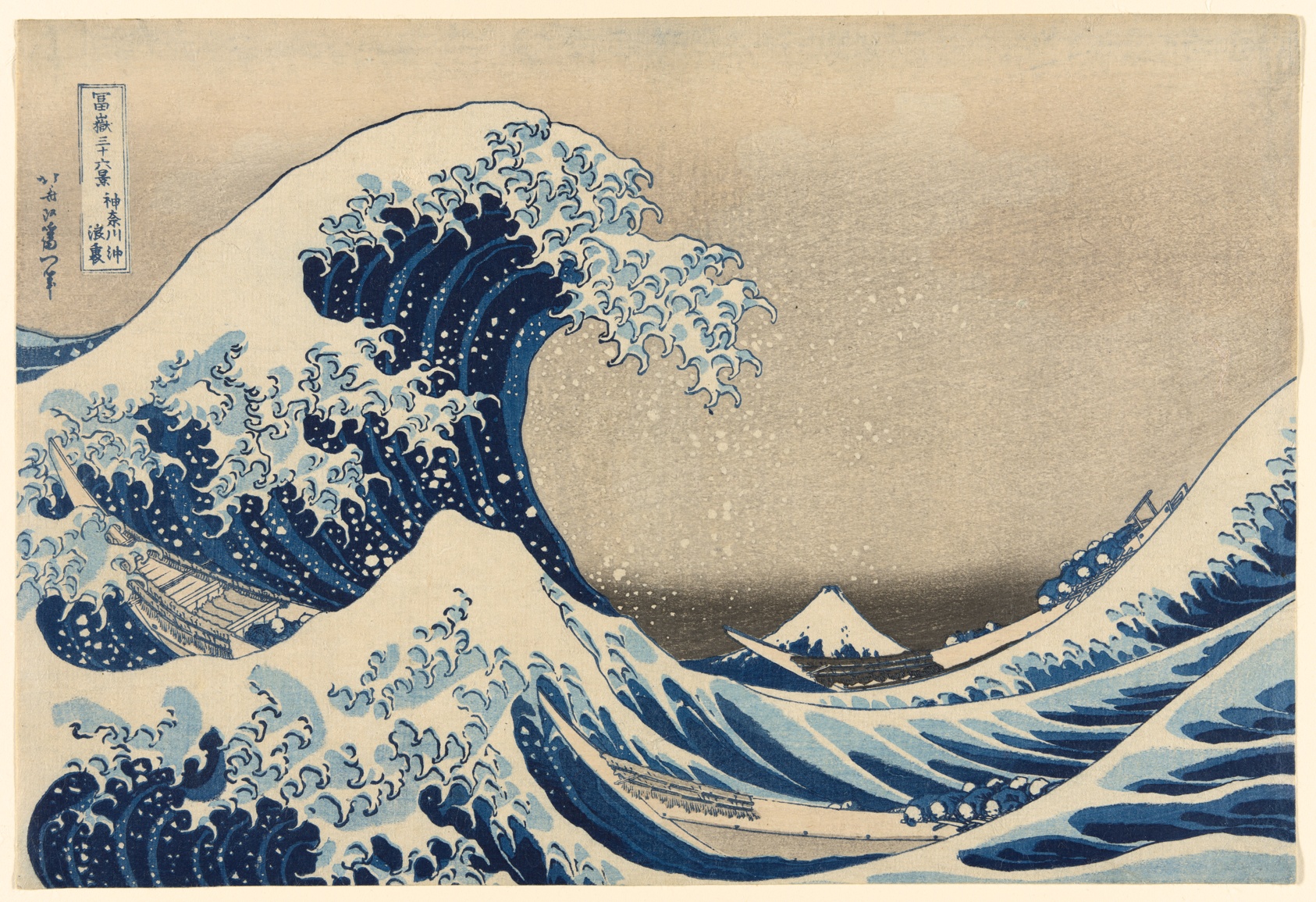 Thirty-six Views of Mount Fuji (Fugaku sanjūrokkei)Under the Wave off Kanagawa (The Great Wave)Katsushika Hokusai · c. 1830–32
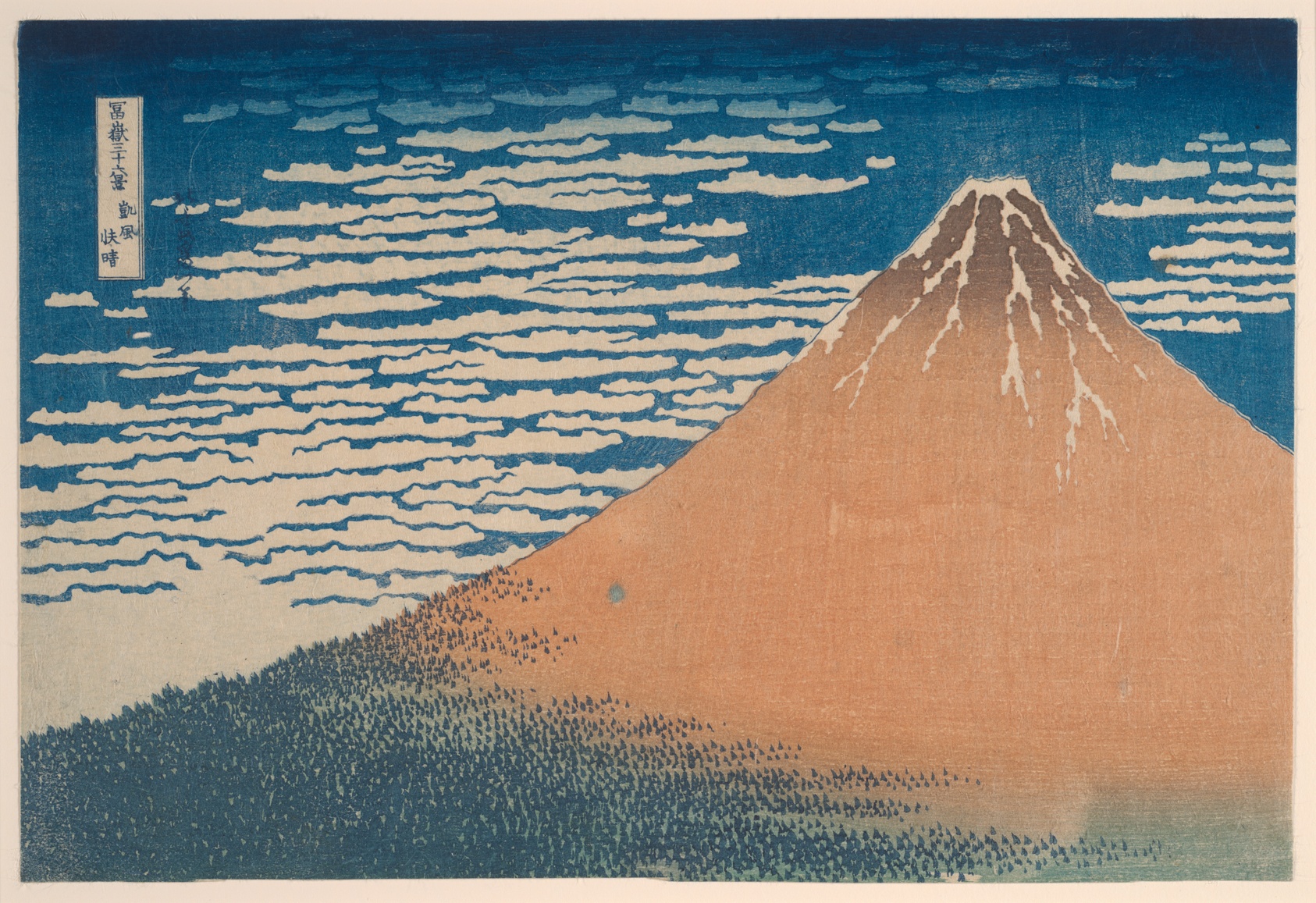 Thirty-six Views of Mount Fuji (Fugaku sanjūrokkei)Fine Wind, Clear Morning (Red Fuji)Katsushika Hokusai · c. 1830–32
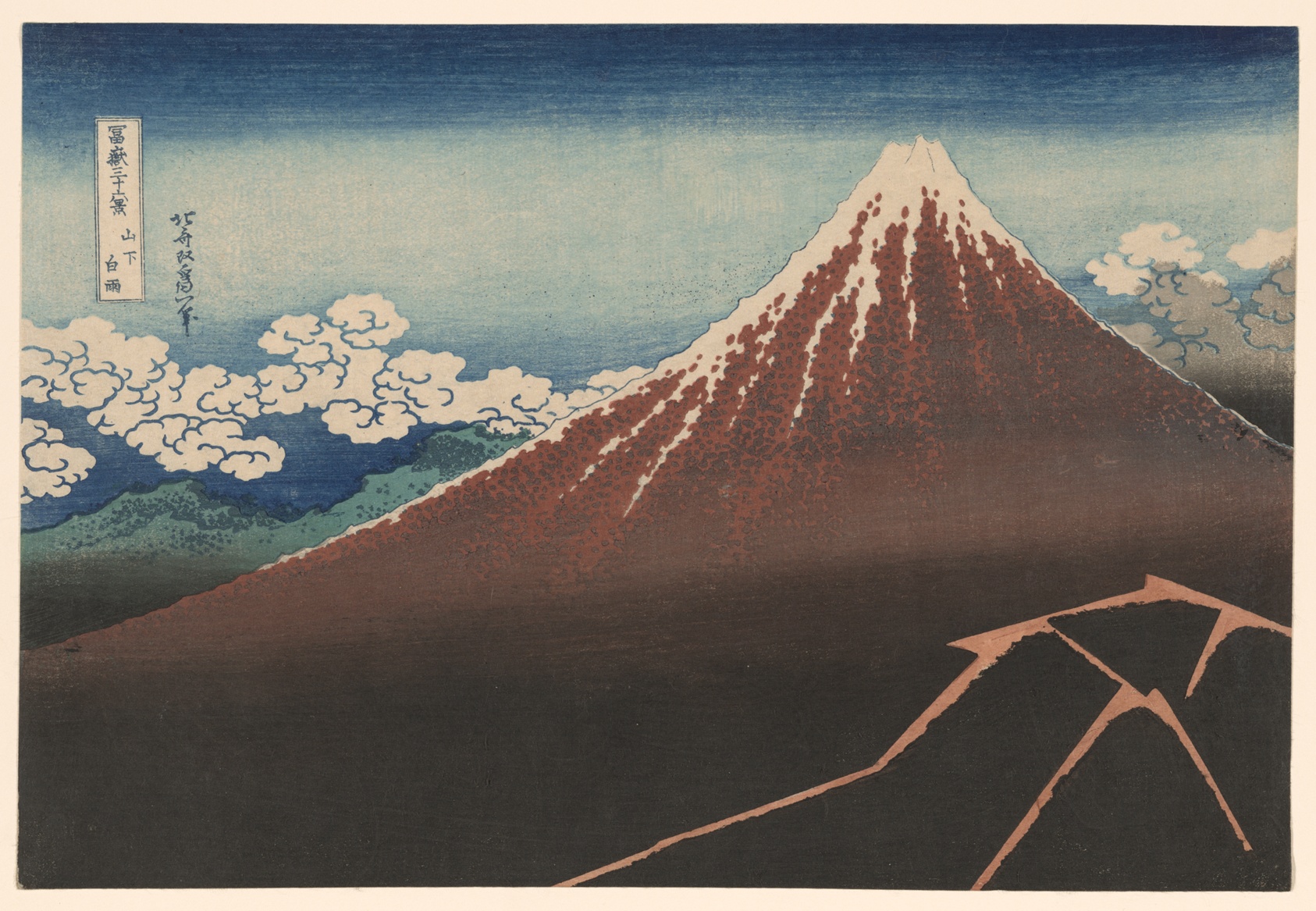 Thirty-six Views of Mount Fuji (Fugaku sanjūrokkei)Thunderstorm Beneath the SummitKatsushika Hokusai · c. 1830–32
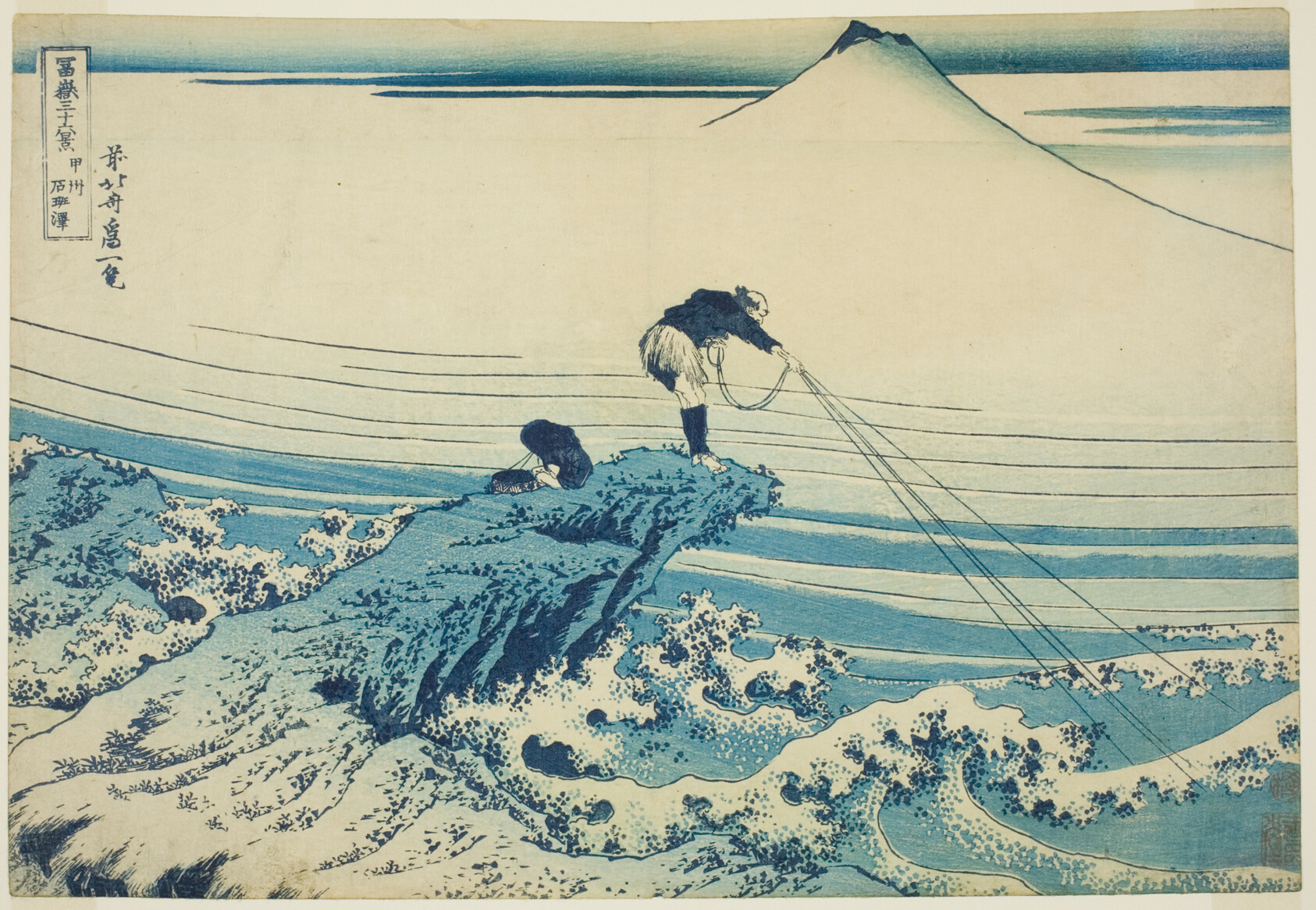 Thirty-six Views of Mount Fuji (Fugaku sanjūrokkei)Kajikazawa in Kai ProvinceKatsushika Hokusai · c. 1830–32
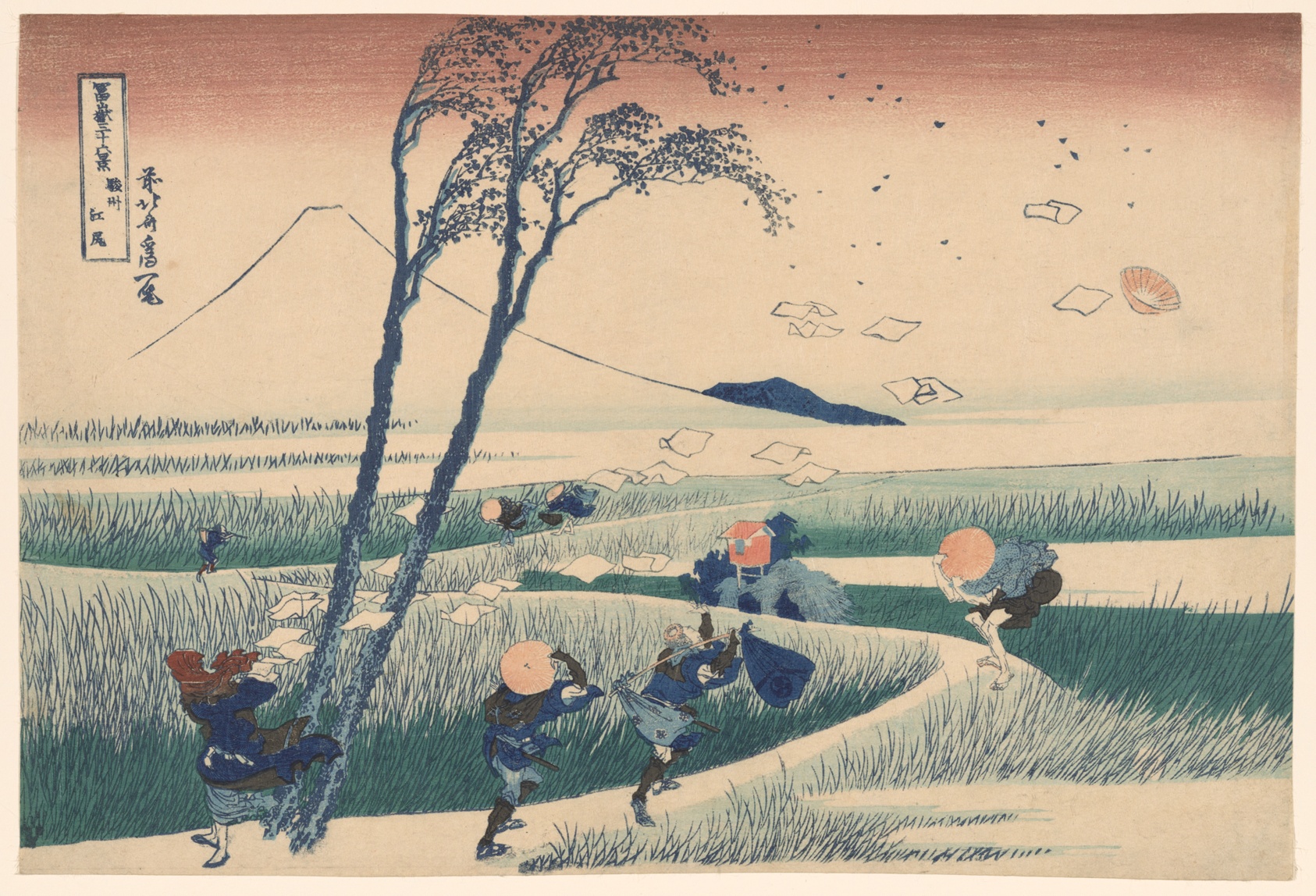 Thirty-six Views of Mount Fuji (Fugaku sanjūrokkei)Ejiri in Suruga ProvinceKatsushika Hokusai · c. 1830–32
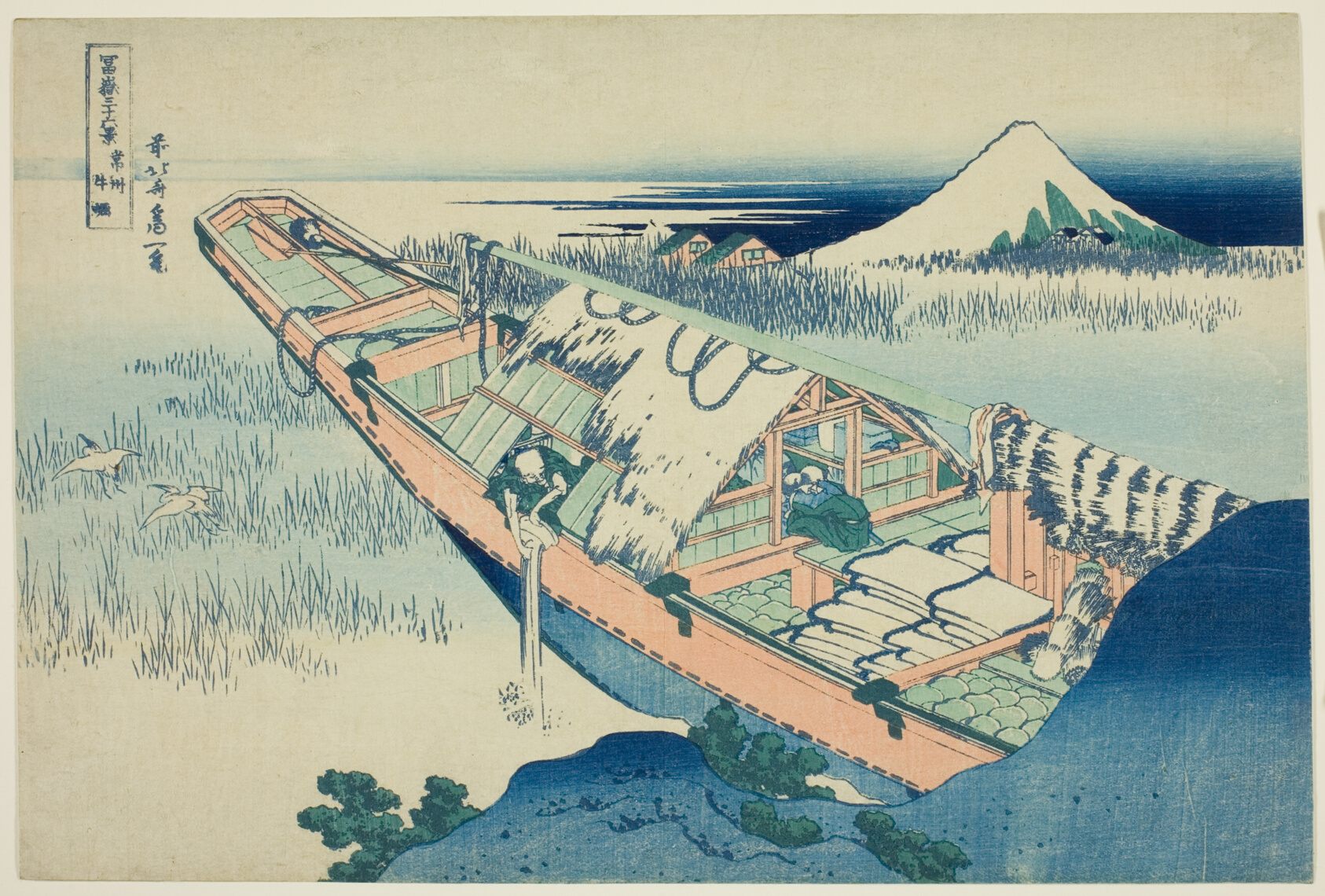 Thirty-six Views of Mount Fuji (Fugaku sanjūrokkei)Ushibori in Hitachi ProvinceKatsushika Hokusai · c. 1830–32
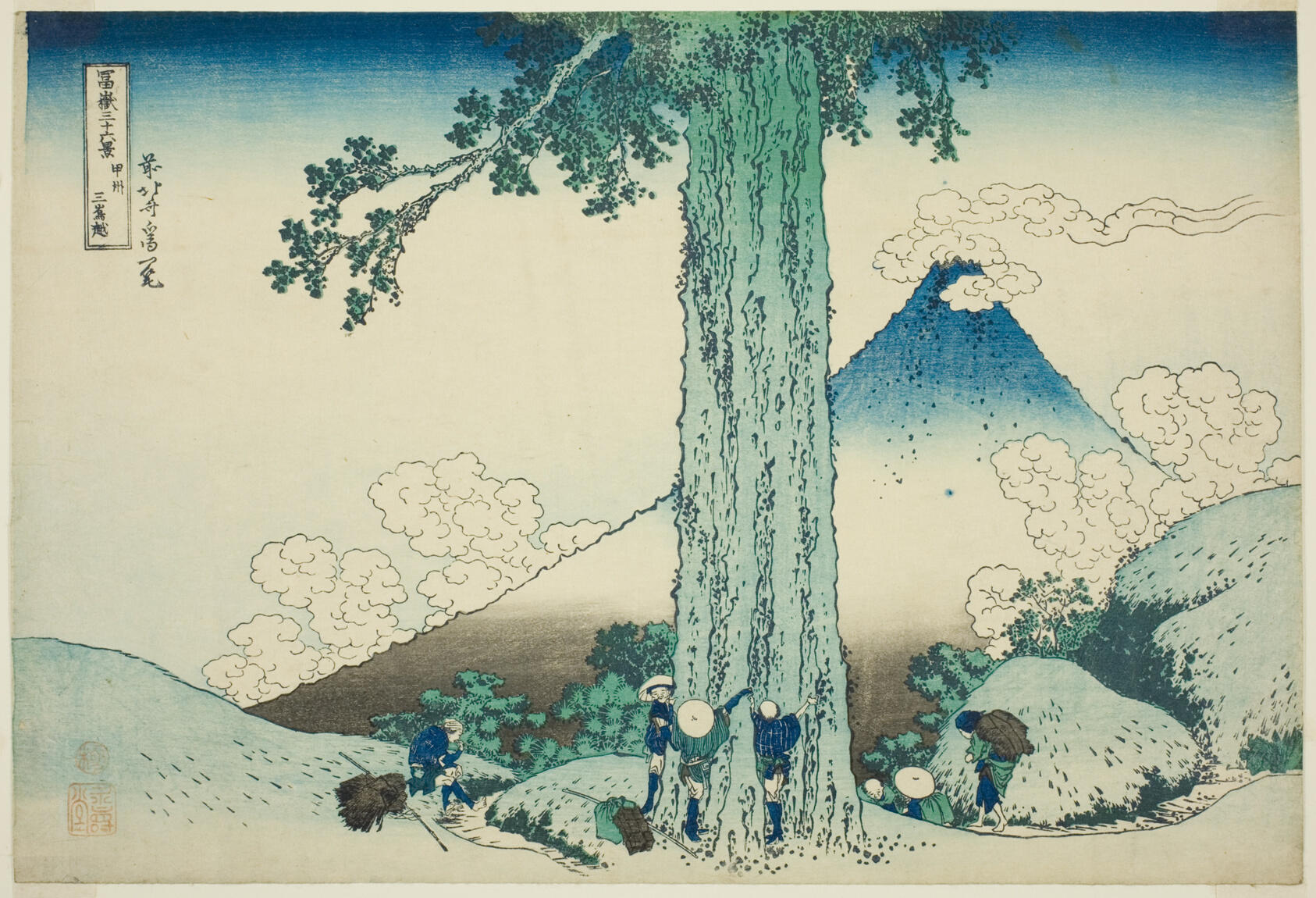 Thirty-six Views of Mount Fuji (Fugaku sanjūrokkei)Mishima Pass in Kai ProvinceKatsushika Hokusai · c. 1830–32
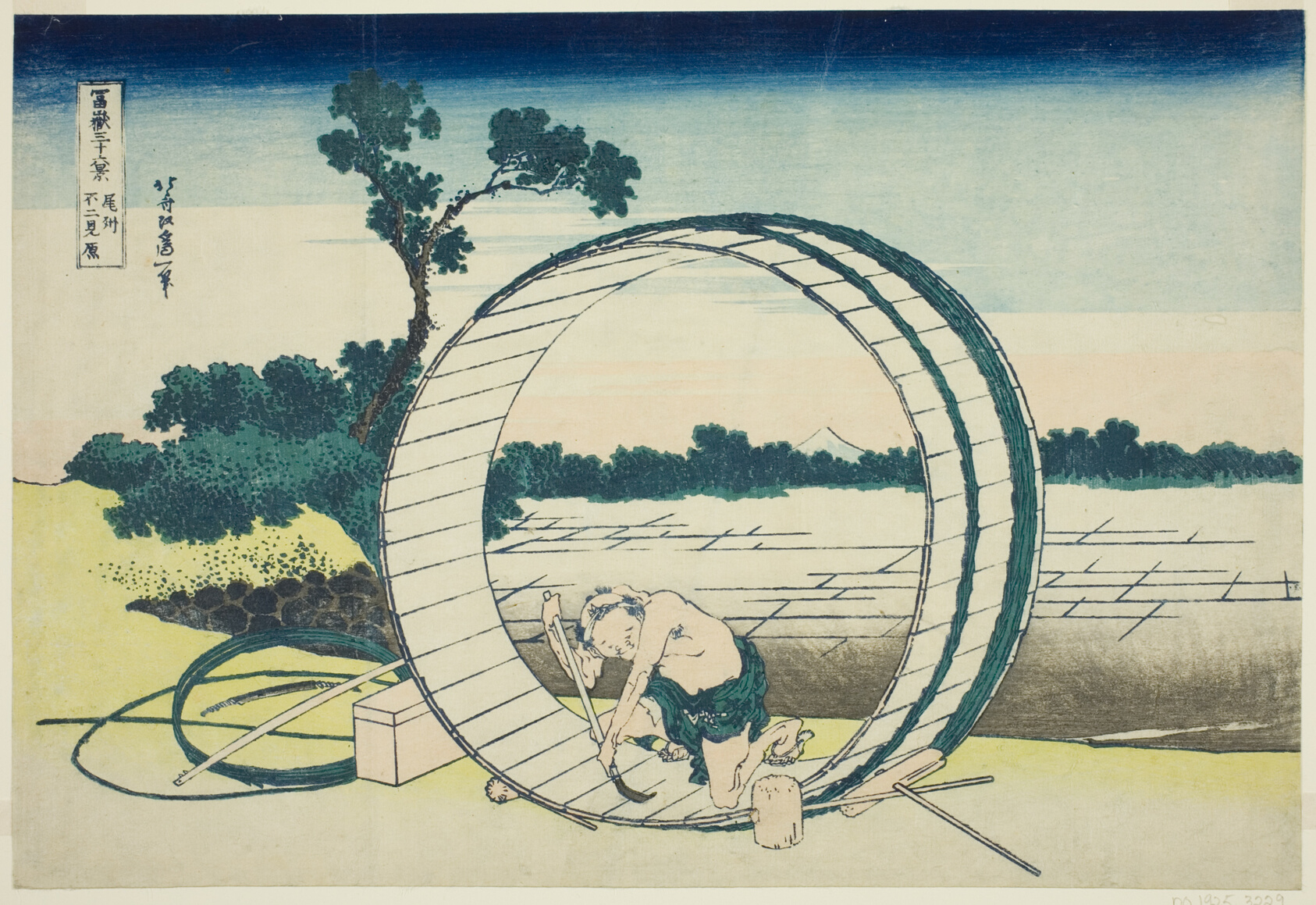 Thirty-six Views of Mount Fuji (Fugaku sanjūrokkei)Fuji View Field in Owari ProvinceKatsushika Hokusai · c. 1830–32
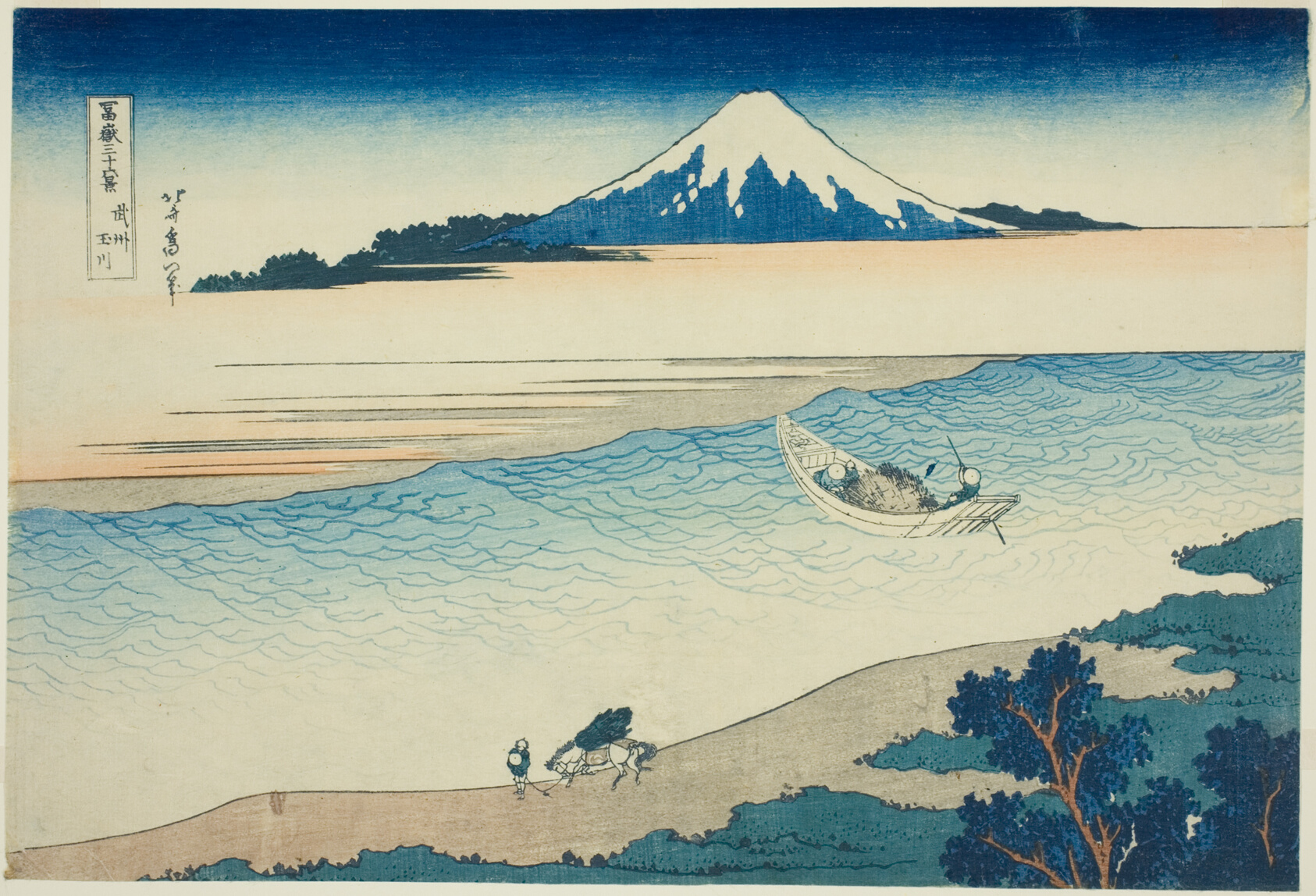 Thirty-six Views of Mount Fuji (Fugaku sanjūrokkei)Tama River in Musashi ProvinceKatsushika Hokusai · c. 1830–32
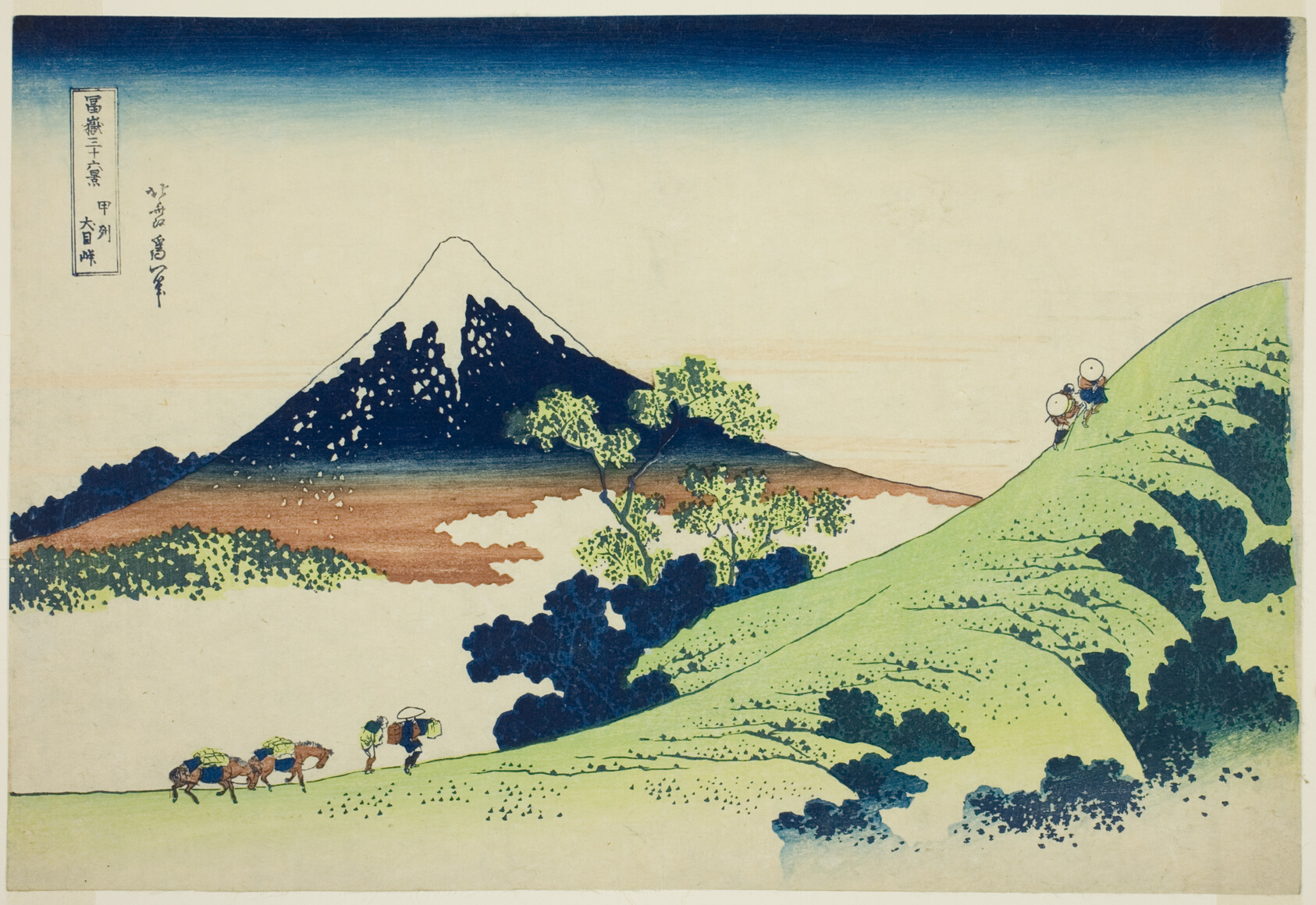 Thirty-six Views of Mount Fuji (Fugaku sanjūrokkei)Inume Pass in Kai ProvinceKatsushika Hokusai · c. 1830–32