Fifty-three Stations of the Tōkaidō (Hōeidō edition)
Hakone: The Lake
箱根 湖水図 · Hakone, kosui zu
Utagawa Hiroshige · c. 1833–34
What it is
The road’s hardest passage: a daimyō procession threads the Hakone pass as a line of tiny figures, jagged crags towering in bold faceted color above the deep blue of Lake Ashi, Fuji white and small beyond.
Why it matters
Hakone was the Tōkaidō’s most feared barrier — the steepest climb and the strictest checkpoint — and Hiroshige answers it with the boldest invention in the series, a mountain broken into planes of raw color a century before anyone called such seeing modern.
What to notice
The crags are pure invention — no outline holds them, only faceted patches of green, blue, ochre and rust; the procession is reduced to ant-small figures swallowed by the pass.
The mountain is crossed one small figure at a time.
The record
- Artist
- Utagawa Hiroshige 歌川広重 (1797–1858)
- Series
- Fifty-three Stations of the Tōkaidō (Hōeidō edition)
- Date
- c. 1833–34
- Publisher
- Hōeidō (Takenouchi Magohachi)
- Medium
- woodblock print; ink and color on paper
- Source
- The Metropolitan Museum of Art · JP481
- bokashi
Impression note. The mountain’s faceted planes are printed as separated blocks of strong color, and their registration and depth of tone vary markedly between printings; fine impressions keep Lake Ashi a deep saturated blue against the white of Fuji. Impression variance is real — printings differ in wiping and fading — and choosing the finest openly held impression is the curatorial act.
Public domain; faithfully reproduced.
Bring it home
Printed to order on EMA matte art paper, 200gsm.
From the same series
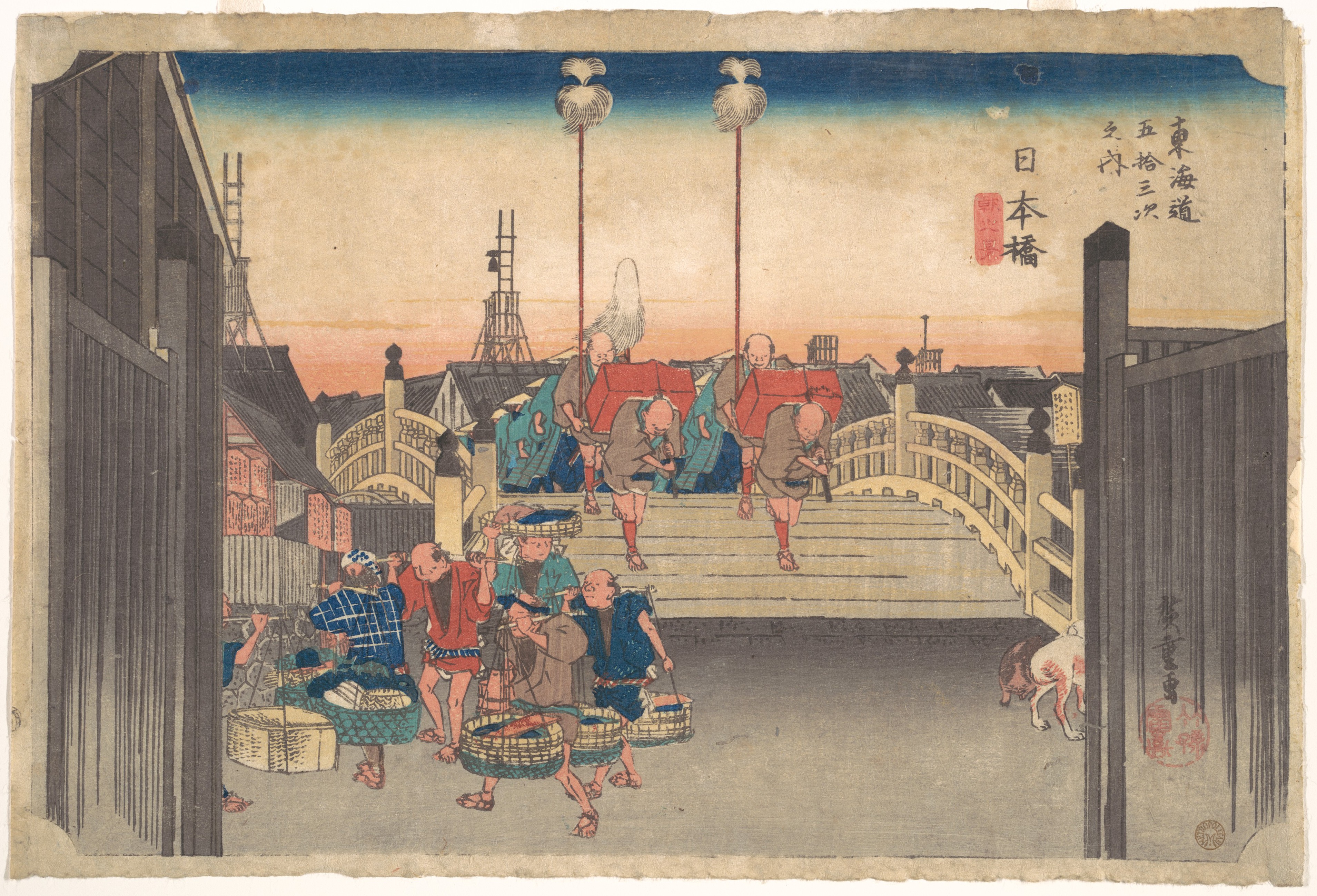 Fifty-three Stations of the Tōkaidō (Hōeidō edition)Nihonbashi: Morning SceneUtagawa Hiroshige · c. 1833–34
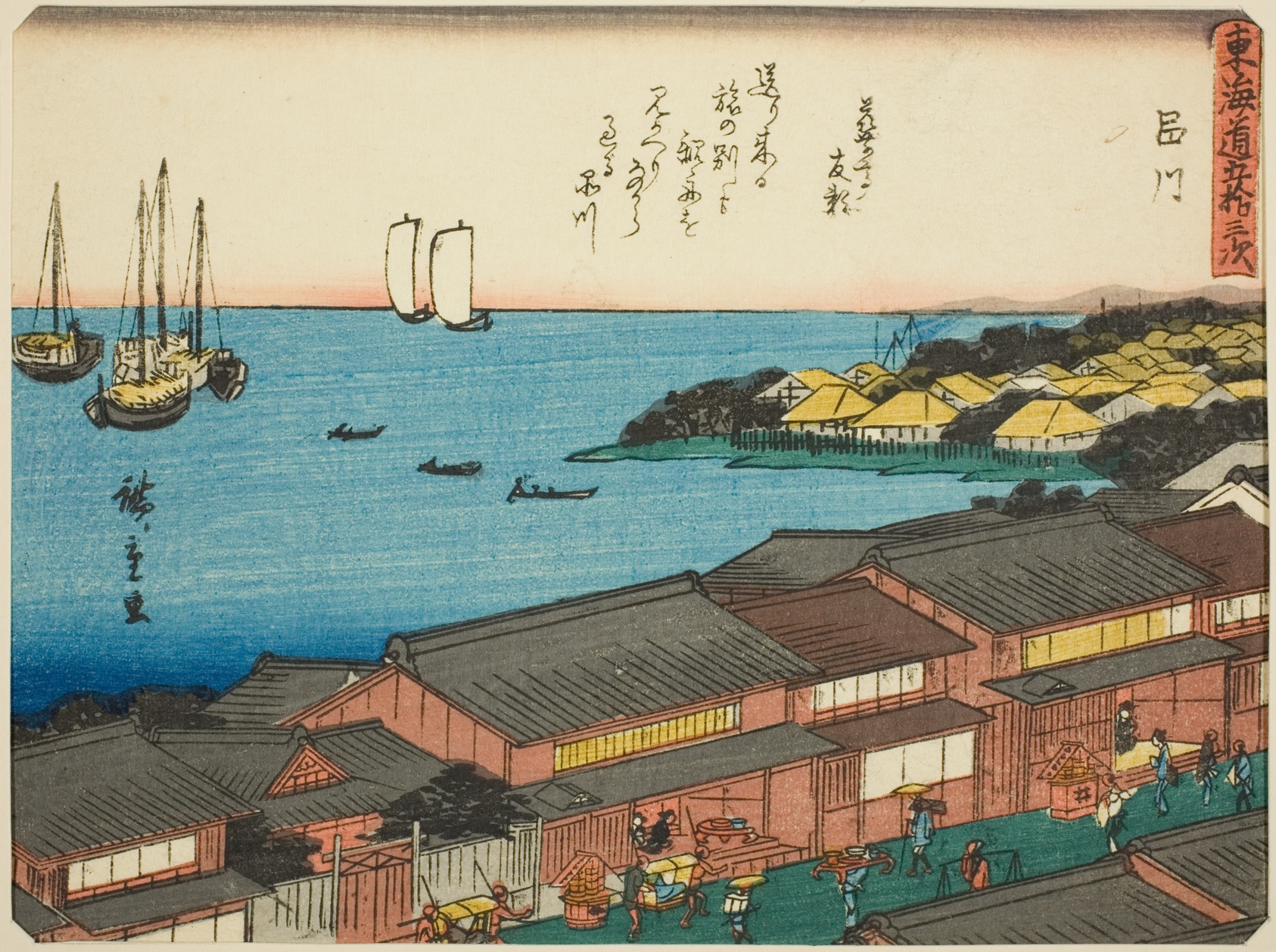 Fifty-three Stations of the Tōkaidō (Hōeidō edition)Shinagawa: SunriseUtagawa Hiroshige · c. 1833–34
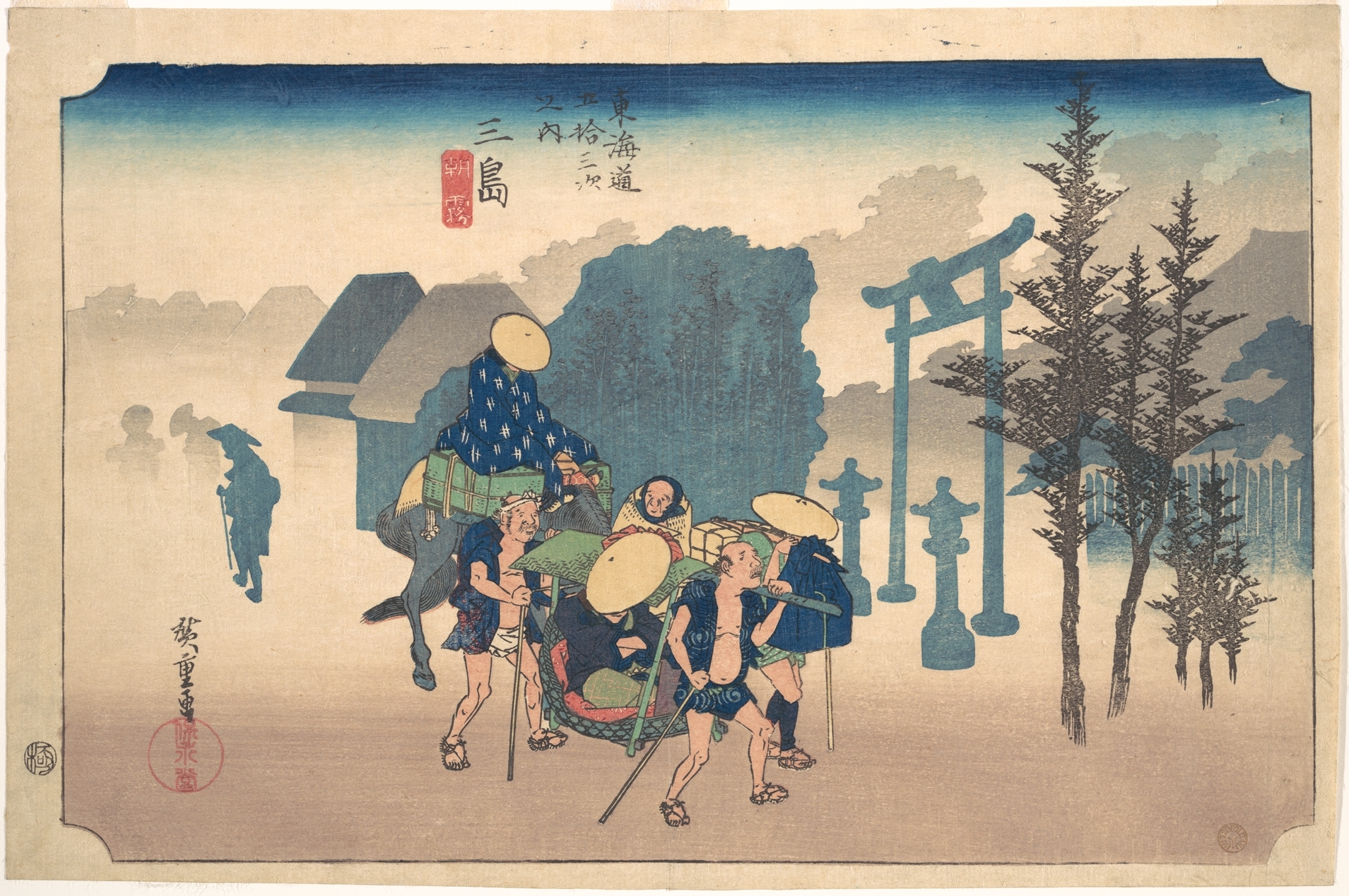 Fifty-three Stations of the Tōkaidō (Hōeidō edition)Mishima: Morning MistUtagawa Hiroshige · c. 1833–34
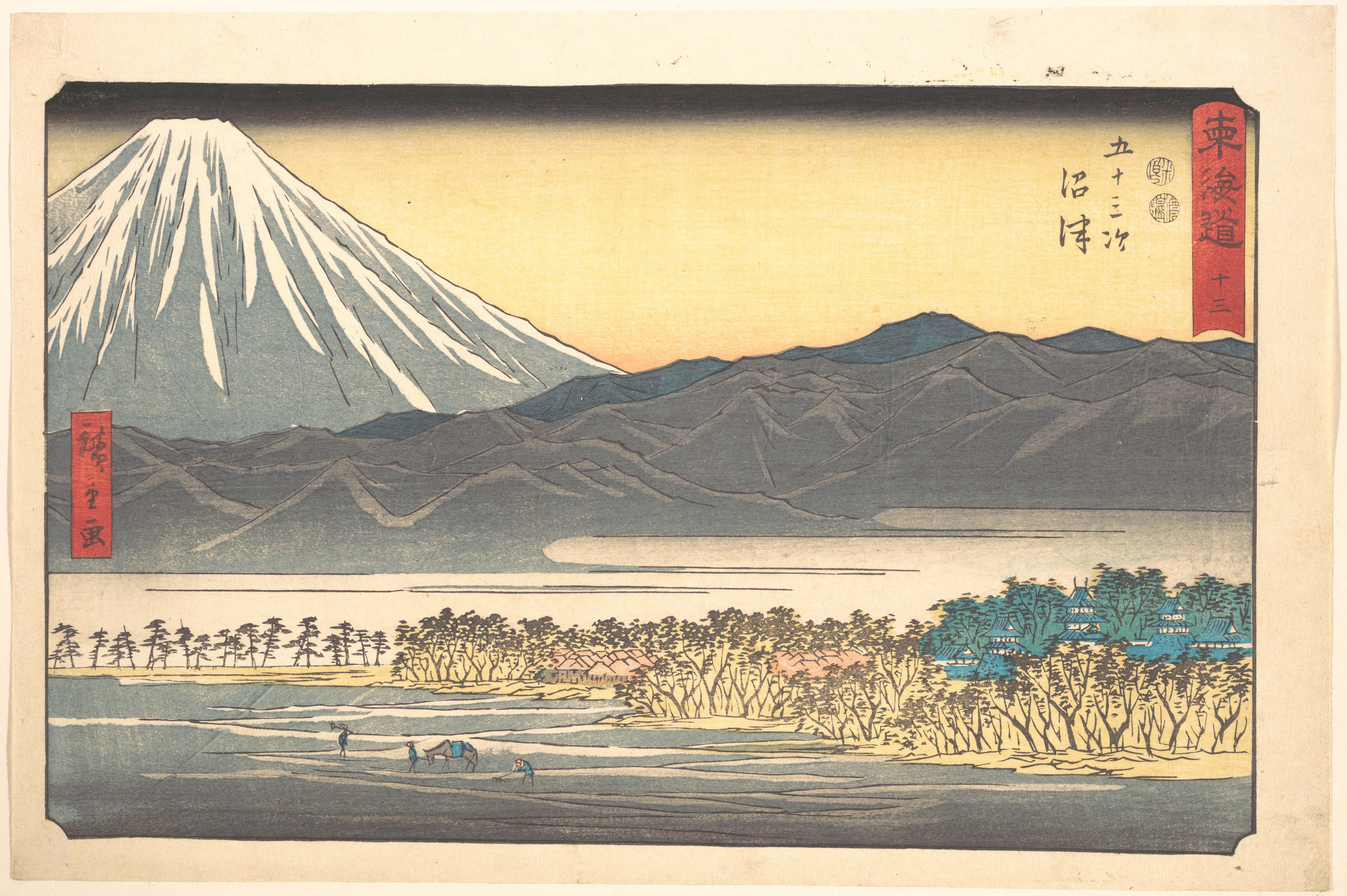 Fifty-three Stations of the Tōkaidō (Hōeidō edition)Numazu: TwilightUtagawa Hiroshige · c. 1833–34
The road at your moment — Painted Earth’s ukiyo-e style pack.