1798–1861
Utagawa Kuniyoshi歌川国芳
Kuniyoshi spent a decade in obscurity before the Suikoden outlaws made him famous overnight, and he repaid the medium with four decades of astonishments: warriors, cats, giant skeletons, satire sharp enough to summon the censors. He kept a studio full of students and strays, and the wit of the floating world’s last generation — Yoshitoshi among them — was trained at his knee.
The workshop
His triptychs treat three sheets as one screen-wide stage, a compositional gamble publishers indulged because his name sold. The Takiyasha skeleton spans all three sheets — a carver’s and printer’s feat as much as a painter’s.
In the house
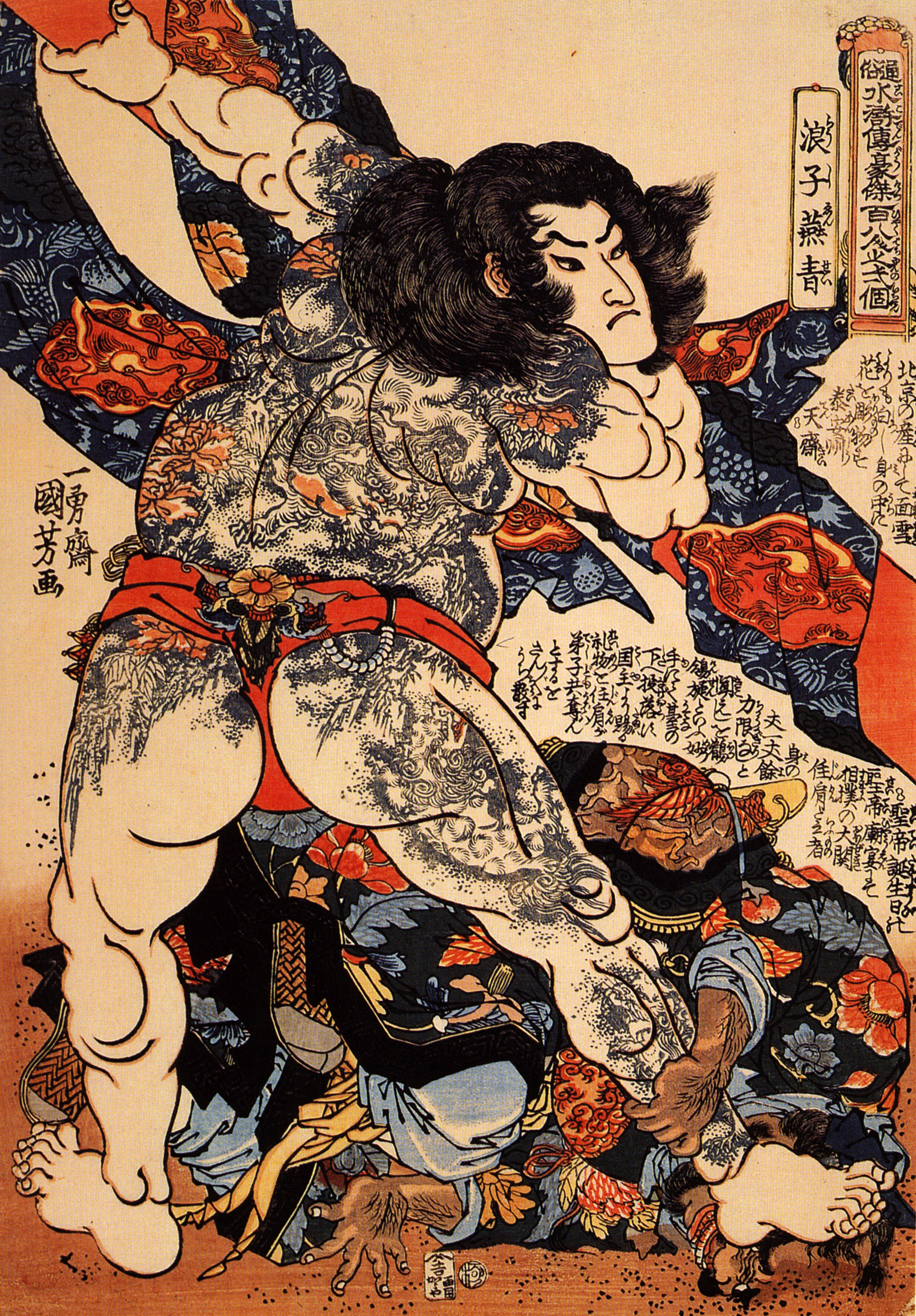 One Hundred and Eight Heroes of the Popular Suikoden (Tsūzoku Suikoden gōketsu hyakuhachinin no hitori)Rōshi EnseiUtagawa Kuniyoshi · c. 1827–30 · from $69.00
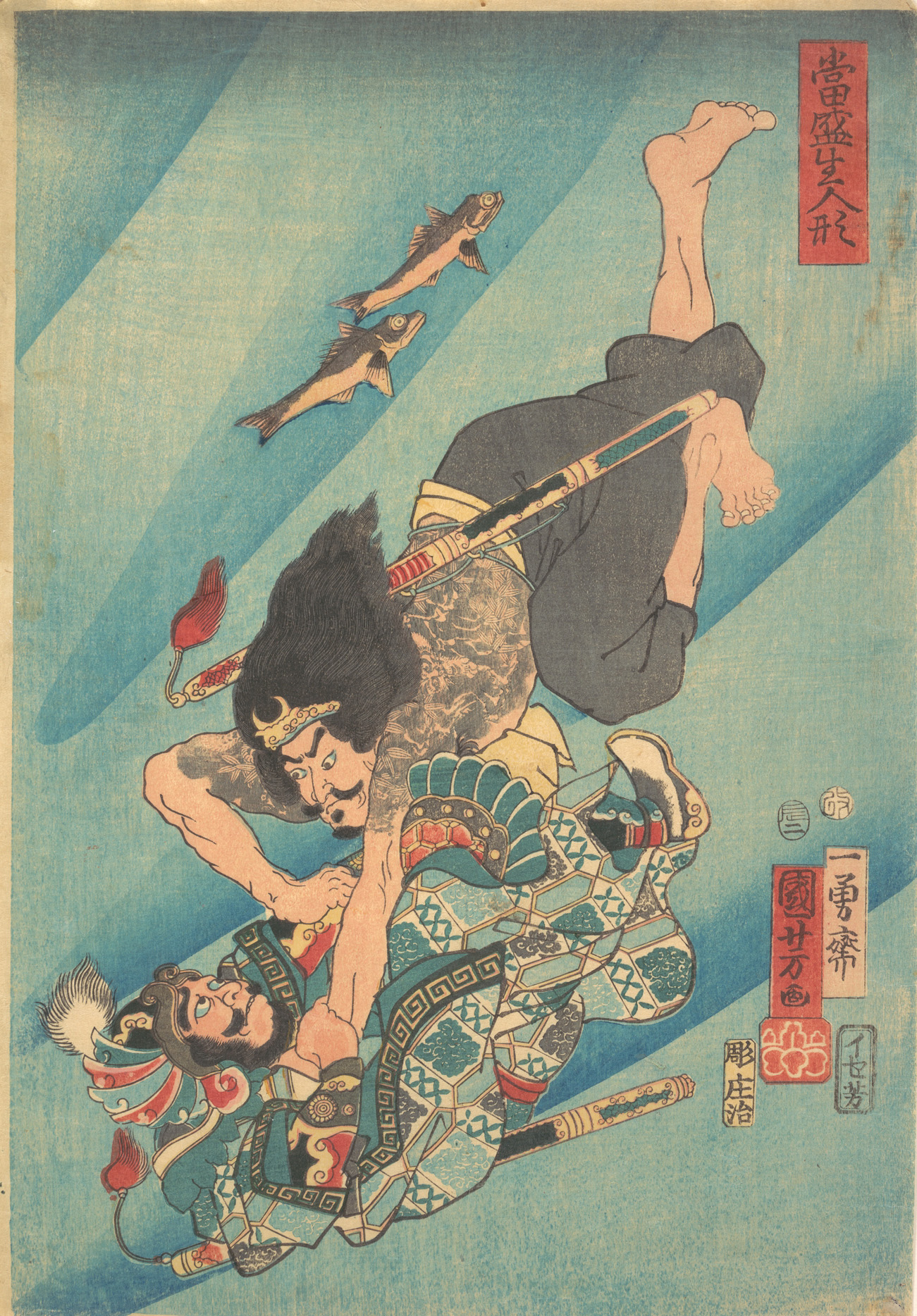 One Hundred and Eight Heroes of the Popular Suikoden (Tsūzoku Suikoden gōketsu hyakuhachinin no hitori)Tanmeijirō GenshōgoUtagawa Kuniyoshi · c. 1827–30
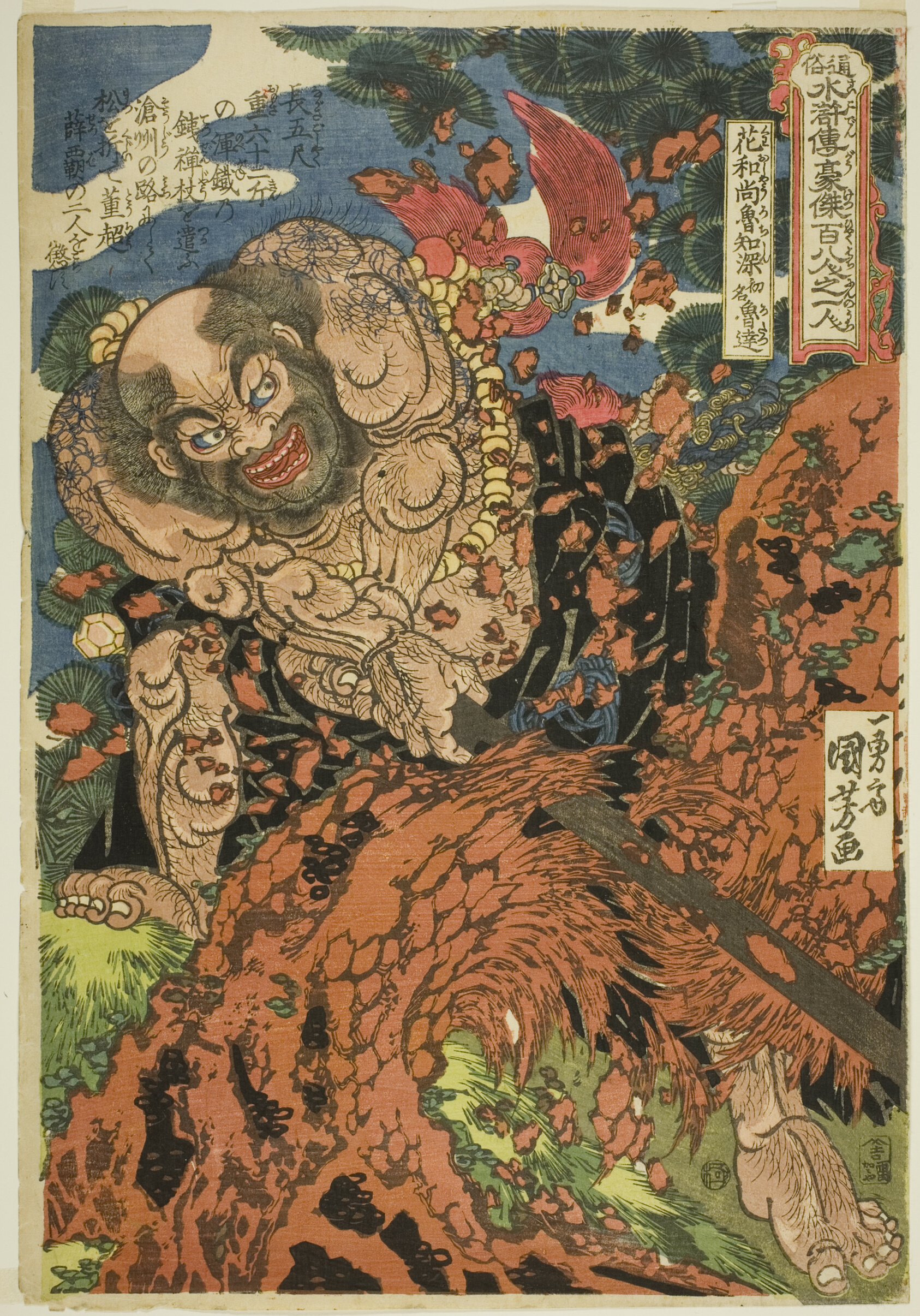 One Hundred and Eight Heroes of the Popular Suikoden (Tsūzoku Suikoden gōketsu hyakuhachinin no hitori)Kaoshō RochishinUtagawa Kuniyoshi · c. 1827–30
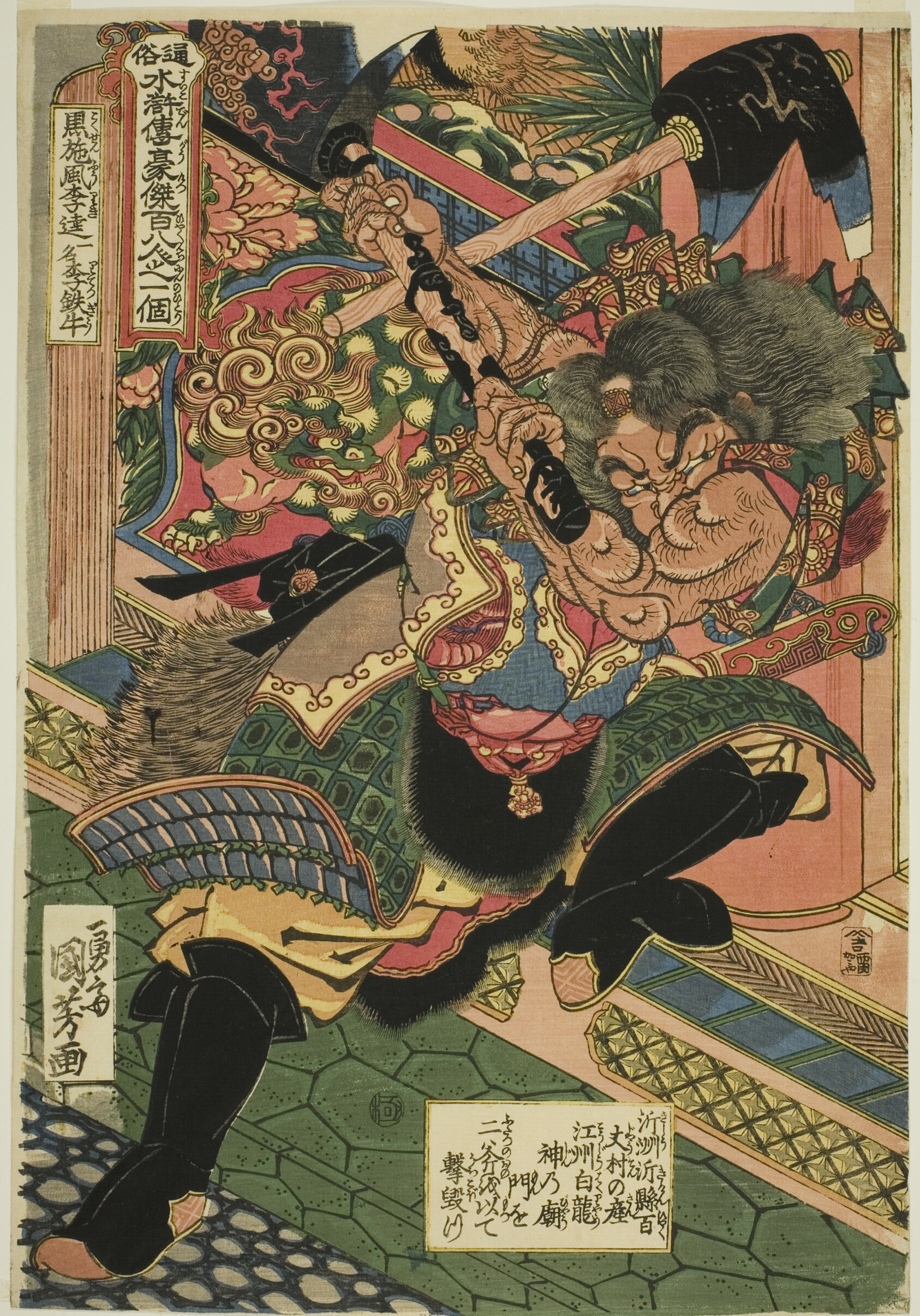 One Hundred and Eight Heroes of the Popular Suikoden (Tsūzoku Suikoden gōketsu hyakuhachinin no hitori)Kokusenpū RikiUtagawa Kuniyoshi · c. 1827–30
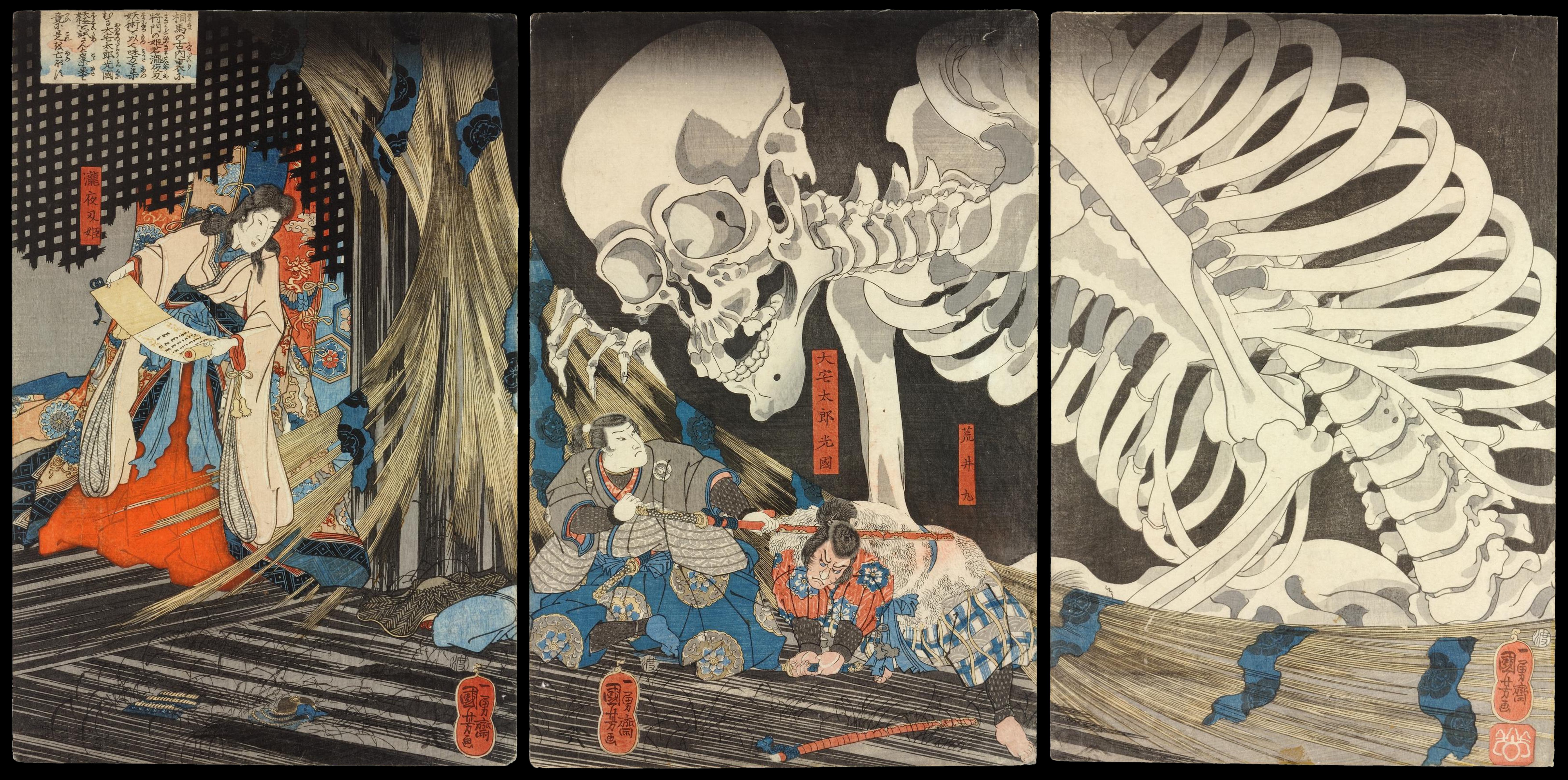 Utagawa KuniyoshiTakiyasha the Witch and the Skeleton SpectreUtagawa Kuniyoshi · c. 1844
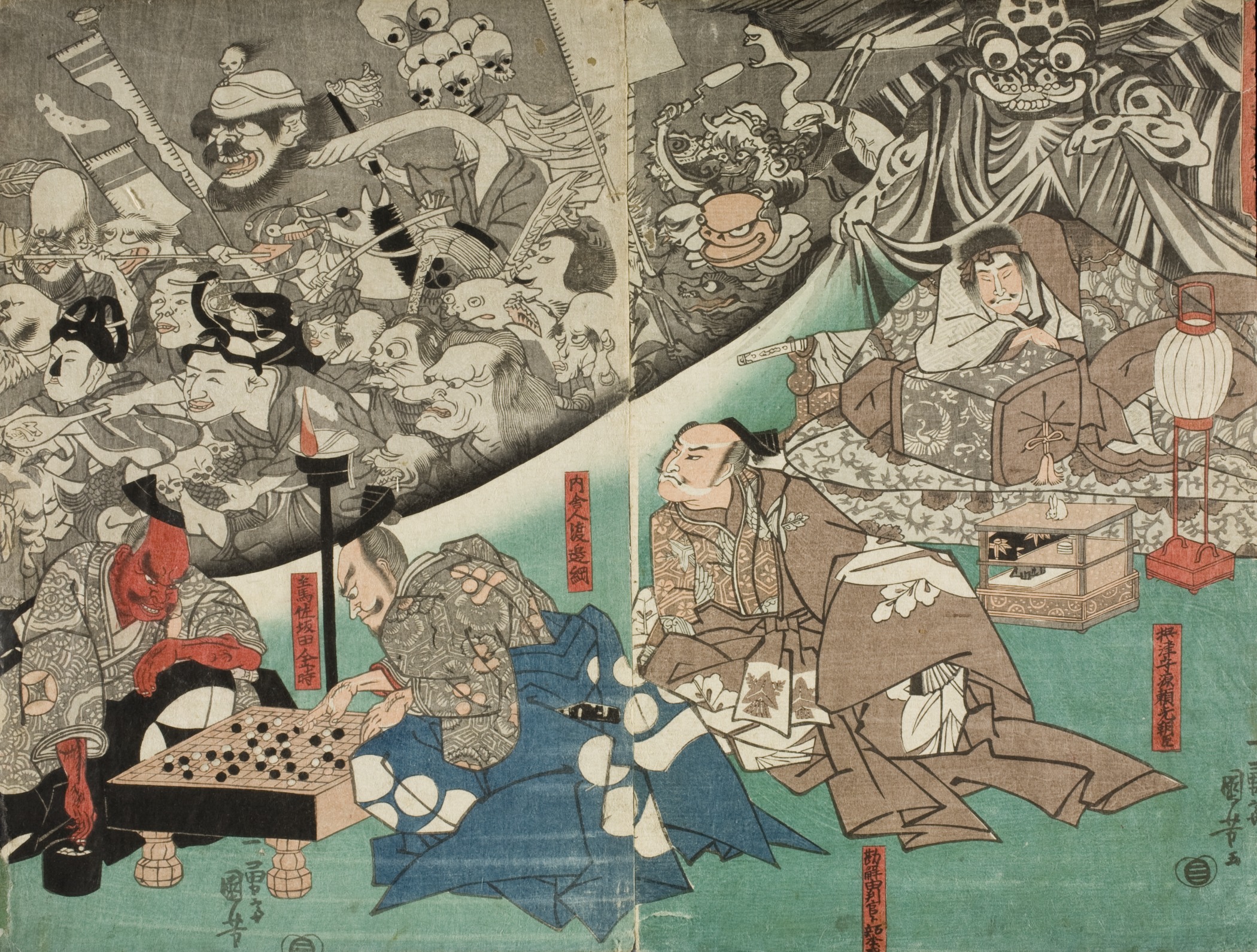 Utagawa KuniyoshiThe Earth Spider Conjures Demons at the Mansion of Minamoto no RaikōUtagawa Kuniyoshi · 1843
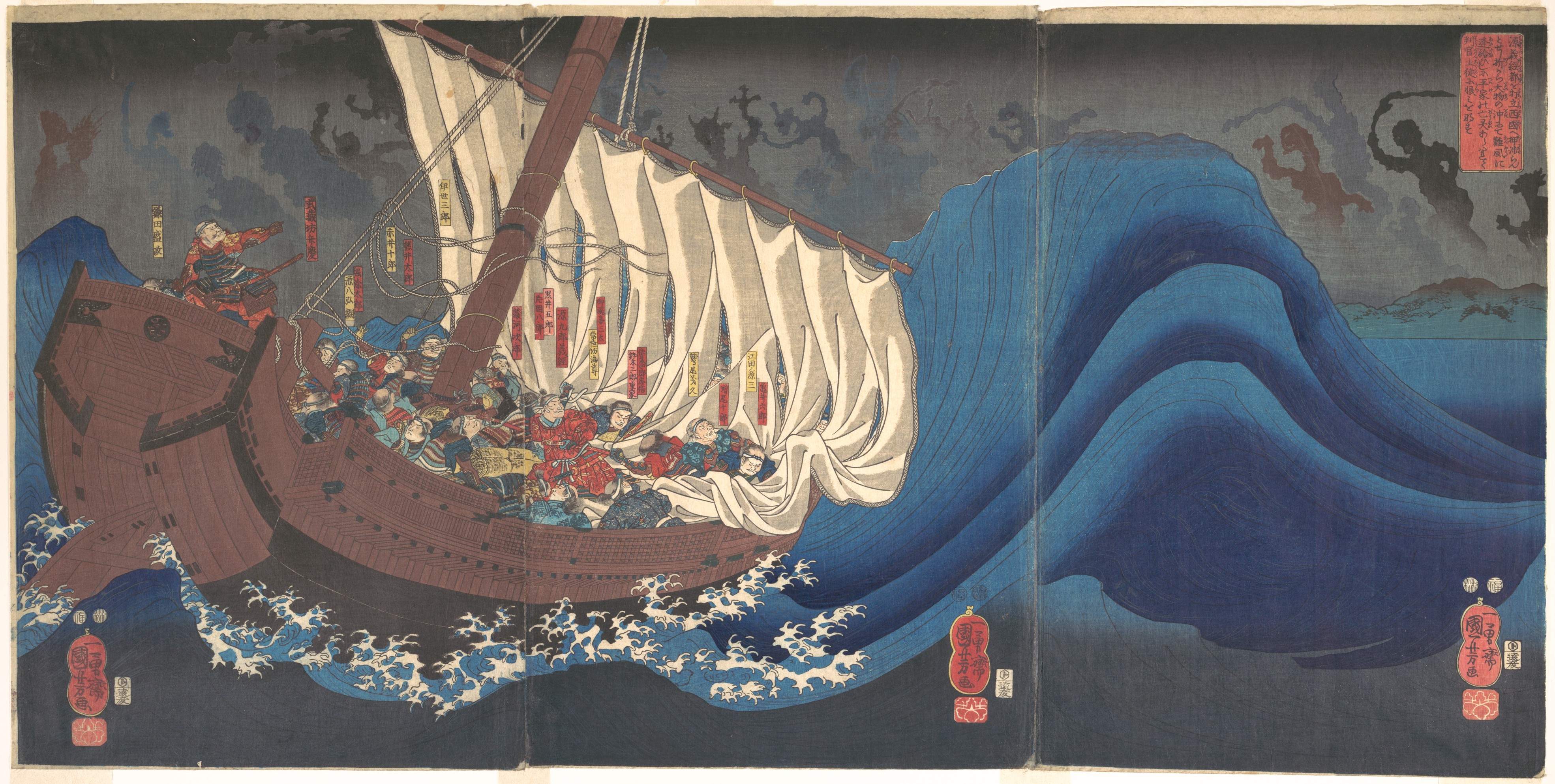 Utagawa KuniyoshiThe Ghosts of the Taira Attack Yoshitsune’s Ship in Daimotsu BayUtagawa Kuniyoshi · c. 1849–1851